
There is a gap we notice more and more often among the young people we work with: almost all of them are fluent users of technology, but relatively few understand what happens behind the screen. They can edit a video in minutes but do not know how a recommendation algorithm works. They use artificial intelligence tools every day but have no vocabulary to discuss their limits. This distance between using and understanding is, to a large extent, what European policies call the difference between basic and advanced digital skills. And for the latter, the European Union has a dedicated programme.
The Digital Europe Programme is the financial instrument through which the European Union supports the digital transformation of the economy and society, with a focus on a few strategic areas: high-performance computing, artificial intelligence, cybersecurity, advanced digital skills and the wide use of digital technologies in the economy and public administration, including through the network of European Digital Innovation Hubs. Unlike Erasmus+, it is not an education programme but an investment in technological capacity. Its advanced digital skills strand broadly funds training and specialisation programmes in cutting-edge technologies, often through consortia of universities, research centres, companies and training organisations. Calls are published on the Funding & Tenders portal.
Where this programme meets our world
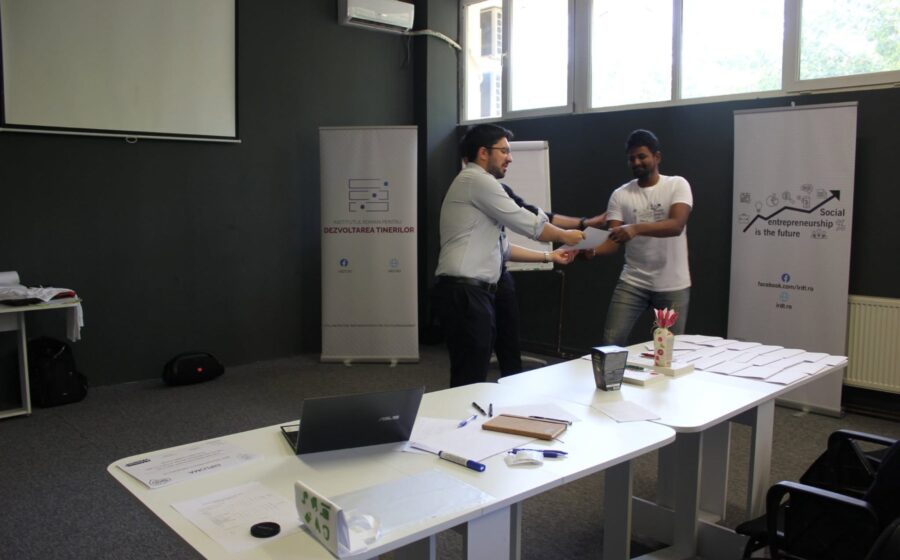
At first sight, a youth organisation doing non-formal education has little to do with supercomputers. And yet, between a university course in artificial intelligence and a nineteen-year-old from a village in Timiș County there is a path that has to be built, and that path runs through motivation, guidance, courage and a first successful experience. Non-formal education, that is, learning deliberately organised outside the school system, through practice and reflection, is very good at exactly these things. The “Shine your light” hackathon we organised in Timișoara did not produce specialists, but it produced young people who discovered they could build something together in two days with a mentor at their side. Youth and Digital Entrepreneurship, a 2018 project, did something similar at European level.
The role of a youth NGO in an advanced digital skills ecosystem is therefore not to teach machine learning but to be the first step: to identify young people with potential from backgrounds with fewer opportunities, to offer them introductory workshops in which technology becomes accessible, to connect them with universities, digital innovation hubs and companies in the region, and to accompany them up to their first application for a serious programme. Timișoara has a developed IT ecosystem and a strong technical university; what is often missing is precisely this access step for those who have no one in their family to tell them they can.
Technology, but also judgement
There is one more dimension that advanced digital skills programmes sometimes treat as secondary but which is central for us: the ability to think critically about technology. Generative artificial intelligence, disinformation, data protection and platform dependence are not abstract ethical topics for young people but daily realities. In “Digital Storytelling in Action!” we worked with young people on how to build a story with digital means, and discussions about what is true, what is manipulated and who decides what we see came up on their own. A young person who will work in cybersecurity or AI development needs this kind of thinking as much as technical skills.
For this reason, we believe the place of non-formal education in the digital transformation is not marginal. The most recent European data show that a considerable share of adults in the Union lack even basic digital skills, and on this indicator Romania is among the Member States facing the greatest challenges. At the same time, the shortage of specialists in advanced fields is one of the constant themes of European policy. Between these two realities, organisations that work directly with young people, in communities, have a bridging role that no one else fulfils.
What we are doing in this direction: skills and career guidance are the first area of our 2024–2027 strategy, and the digital component is part of it. We will continue to organise workshops and hackathon-style formats, look for partnerships with universities and digital innovation actors in Timișoara, and follow the Digital Europe Programme calls in which a partner like us has a legitimate role, usually in attracting and preparing young people for advanced training programmes. We do not intend to become what we are not, but to do well what we know, within a wider ecosystem.
Similar articles
Universities, NGOs and companies: what a local partnership that delivers for young people looks like
Partnerships between universities, NGOs and companies are often invoked and rarely functional. What we have learned about the ones that actually deliver.
Read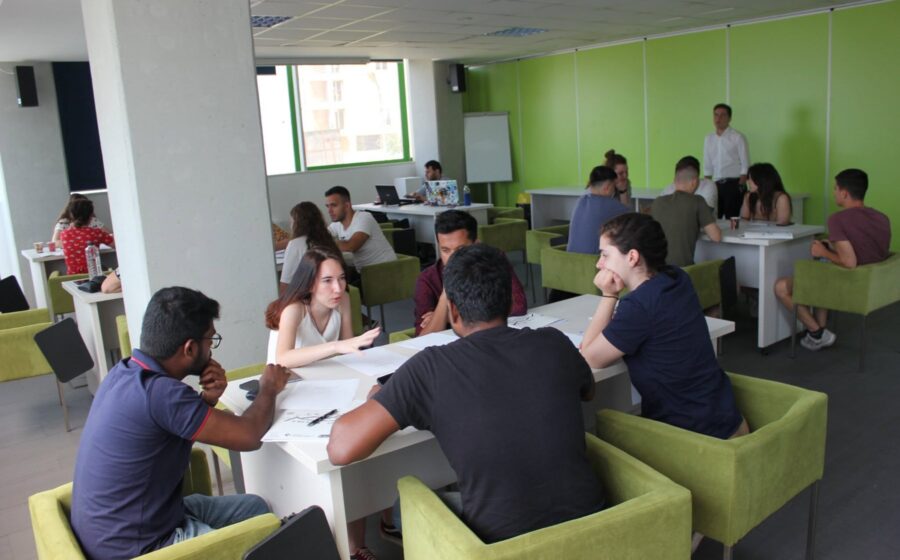
Choosing the right programme for a youth project idea: European, national or local
Erasmus+, CERV, the European Solidarity Corps, structural funds or local grants? Practical criteria for matching the idea to the programme.
Read
Democracy, European values and young people: what the CERV programme funds and why it matters for a city like Timișoara
The CERV programme funds projects on democracy, rights and civic participation. What it means for a youth NGO in Timișoara.
Read